We've spent our lives on this island. Here's what we'd tell our own daughters, friends or sisters before they traveled it alone.
By Diaspora Traveler · Santo Domingo
The question lands in our inbox at least three times a week, often after midnight in some American time zone, written with the slightly embarrassed tone of a woman who suspects she already knows the answer. Is the Dominican Republic actually safe for women traveling alone?
We understand why they ask. The Dominican Republic occupies a strange place in the American imagination — a postcard of turquoise water and all-inclusive resorts on one hand, the occasional headline about tourist incidents on the other. Travel forums oscillate between glowing reviews and dramatic warnings, often within the same thread. For a woman planning her first solo international trip, the noise can be paralyzing.
So here is our honest answer, written from the place we know best our home. We're going to tell you what most travel blogs won't: yes, it's safe. And yes, there are things about traveling here as a woman that you should know before you come. Both parts of that sentence matter.
The Dominican Republic is safe for only female travelers. It is also a country that rewards women who arrive with intention and open eyes.
In this article we'll walk you through the realities of traveling here as a woman alone, the precautions that experienced travelers take, the regions we recommend, and why we think it's still worth crossing an ocean for. By the end, you'll have what most safety guides never give you: not a list of fears, but a framework for confidence.
A note on who's writing this
We are Diaspora Traveler , a women-owned tour operator based in Santo Domingo. The two of us Melany & Meyelin are Dominican women who grew up here, traveled the island in every direction, and now design cultural experiences for women who want to know our country beyond the resort gates. We have hosted solo travelers from all over the world. We have walked them through the Colonial Zone after dark, taken them to waterfalls only locals know, and watched them dance bachata at 2am on a Saturday in a packed plaza. We've also had honest conversations about what to do when something feels off, how to read a situation, and when to trust your instincts.
This is not a post written by an outsider compiling Google results. It's written by women who live here.
The current safety landscape without the panic, without the gloss
The Dominican Republic is, statistically, one of the safer countries in the Caribbean and in Latin America for international travelers. The U.S. State Department lists it at Level 2 exercise increased caution, which is the same advisory level as France, Spain, and Italy. Most American visitors are familiar with the major risks: petty theft in tourist zones, isolated incidents at resorts, and traffic that takes some getting used to.
For solo female travelers, the reality is more nuanced. The risks are not generally what tabloid headlines suggest. They are smaller, more mundane, and almost always preventable with the kind of awareness that any seasoned traveler develops anywhere in the world.
What you actually need to be aware of
Catcalling exists, and it is loud. Dominican men are expressive, and a woman walking alone, particularly a foreigner will receive comments. This is uncomfortable, but rarely escalates if ignored. We have learned over a lifetime to keep walking, not engage, and if necessary, step into the nearest shop or restaurant. American and European women are sometimes more rattled by this than the actual risk warrants. We’ll talk more about this below because it’s connected to a cultural conversation worth having honestly.
Petty theft is the most common issue. Phones snatched off café tables, bags left on the back of chairs, valuables visible in rental cars. None of this is unique to the Dominican Republic, but the rules are universal: keep your phone in your hand or your bag, never leave anything visible in a parked car, and don’t walk in tourist areas with expensive jewelry.
Taxis and rideshare require thought. Uber works reliably in Santo Domingo and Santiago. We do not recommend hailing taxis off the street, particularly at night. If you book a hotel transfer, confirm the driver’s name before getting in.
Drinks at the resort or bar. The same rule that applies in Miami, Madrid, or Mexico City applies here: don’t leave your drink unattended. We recommend ordering bottled or canned drinks in unfamiliar places and watching the bartender pour.
The cultural piece most guides won’t mention
Here’s where we want to be honest. The Dominican Republic is a country with a deeply rooted traditional culture, particularly around gender roles. Things are slowly changing there’s a growing movement of Dominican women claiming space, opening businesses, occupying leadership positions, calling out what isn’t right. But that transformation is still in progress.
What does this mean for you as a traveler? It means you’ll notice gender dynamics that are more visible here than in many countries in Europe or North America. You’ll see more attention paid to your appearance, more direct interactions from men than you might be used to. This doesn’t make the Dominican Republic a dangerous country for women it makes it a country where awareness of how you move through it matters more.
And here’s the part most guides will never tell you, because they don’t know it: there is an invisible network of women in this country that has been protecting other women for generations.
Dominican women have always taken care of each other even strangers, even in silence.
Throughout our history, women have been the ones responsible for holding the household together. Out of that responsibility came something extraordinary: a culture of looking out for each other in public spaces, even between women who don’t know each other’s names. The look across a bus when something feels off. The «ven, siéntate aquí» from a woman in a café when she sees you alone and unsure. The vendor who quietly walks alongside you for a block before pointing toward your destination. None of this is announced. None of this is published in guidebooks. It just exists, woven into daily life.
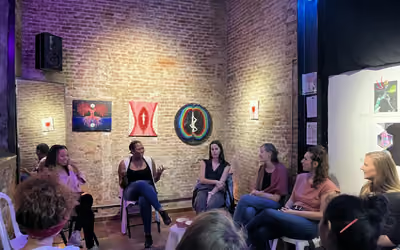
And things are shifting in louder ways too. As Dominican women have gained visibility and economic power, the culture is changing in real time. We are claiming space we didn’t have before. We are calling things out. It is dramatically easier today than it was even ten years ago to find women-led spaces, women-owned businesses, and communities open to foreign women. The Colonial Zone alone has more women-owned cafés, bookstores, art studios and travel collectives than ever before many of which welcome solo female travelers as part of their community, not as customers.
There’s also a quieter shift worth naming: Dominican men, generally speaking, know not to disrespect a foreign woman. Catcalls aimed at locals are sometimes loud and persistent but the same men will often go quiet when a foreign woman walks by, or limit themselves to a brief «buenos días.» It’s not perfect, and it’s not universal, but the cultural awareness has grown. Foreign women, in our experience, encounter far less harassment than the headlines might suggest.
Both things are true at once. The country is changing fast and the women here have always known how to take care of each other.
Where to go (and where to skip) as a solo female traveler
If you are visiting the country for the first time, your itinerary matters more than any single safety tip.
Santo Domingo’s Colonial Zone
For any first-time solo female traveler, our recommendation is to start in the Colonial Zone of Santo Domingo. It is the first city of the continent, walkable, well-policed, full of women-owned businesses and home to a vibrant community of international travelers and locals who congregate in its plazas. We have walked these streets at 11pm on a Tuesday and felt nothing but the rhythm of bachata escaping from bar windows.
Bonao and the central mountains
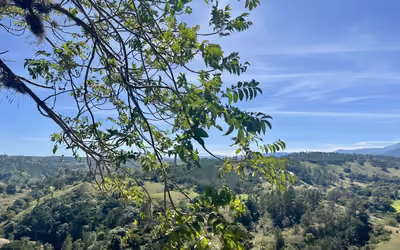
If you’re drawn to nature waterfalls, hikes, coffee farms, river swims the central mountain region around Bonao is one of the country’s gems. The pace is slower. The food comes from the land you can see from the porch. The mornings smell like fresh coffee and damp earth. Going alone, however, requires a guide. Trails are not marked, locals don’t always speak English, and rural areas are best experienced with someone who knows them.
The Samaná Peninsula
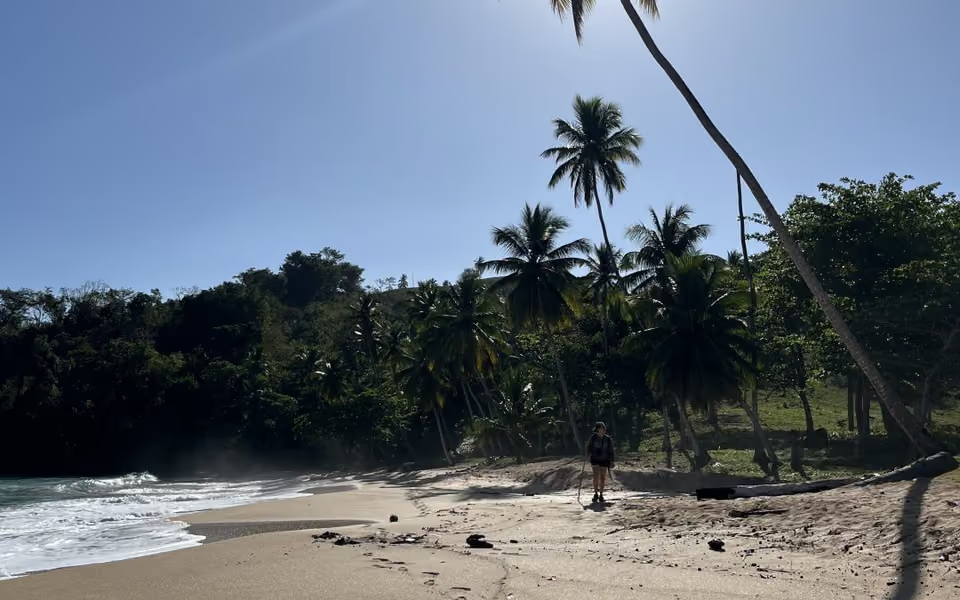
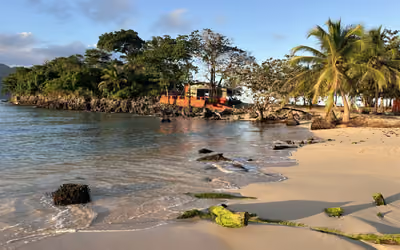
Samaná on the country’s northeastern coast is one of the most welcoming regions for solo women. The town of Las Galeras and the area around Las Terrenas have strong international communities, women-owned restaurants and cafés, and a beach culture that feels safe even after dark. Hidden beaches like Playa Frontón and Playa Madama are accessible only by hike or by boat meaning fewer crowds and the kind of water that makes you understand why people use the word «turquoise.»
Where we suggest more caution
Punta Cana is generally safe within resort grounds, but it’s also where most tourist-targeting incidents occur, simply because that’s where most tourists are. If you go, treat it like any beach resort destination anywhere in the world. We don’t take our cultural travelers there because the all-inclusive experience is the opposite of what we offer but statistically, it’s fine.
A note about music, neighborhoods, and going where the rhythm lives
There’s a particular kind of traveler who comes to the Dominican Republic chasing the music the real bachata, the dembow that shaped the sound, the merengue you hear escaping from a colmado at 9pm on a Wednesday. We love this kind of traveler. The truth most guides won’t tell you is that some of the most authentic places to feel that energy are in neighborhoods we don’t recommend exploring on your own. Places like La 42, Los Guandules, Capotillo, Gualey, Los Mina these are the neighborhoods where dembow was born, where the rhythm has deep roots, and where some of the best community parties happen. They are also neighborhoods where, even as locals, we don’t go alone or without someone from there to bring us in.
Even I, as a Dominican woman, stand out in those neighborhoods. These are places we respect and only enter when someone from the community invites us in.
This is not a moral judgment about these neighborhoods. They are home to incredible artists, deep musical heritage, and tight-knit communities. It’s an honest read of dynamics that take time to understand codes of behavior, social tensions, the difference between being welcomed and being out of place. As a foreign woman alone, you would stand out immediately, and that visibility carries risk that has nothing to do with hostility and everything to do with not knowing how to move.
If you want to feel the music in its rawest form, the answer isn’t to skip it the answer is to go with someone who knows. Hire a local guide who specializes in cultural music tours. Book a curated experience with a women-led collective. Or come with us every Diaspora Traveler trip includes nights of bachata, merengue and street dance in spaces where you’ll be welcomed because you’re with people who belong.
The cultural piece nobody tells you
Every safety guide will tell you to use a money belt and not flash valuables. Few tell you the most important truth about traveling here: Dominicans are warm, communal, and almost reflexively protective of women they perceive as visitors. If you ask for directions, the woman selling fruit will likely walk you halfway there. If you sit alone at a restaurant and look uncertain, the family at the next table will probably invite you to join.
This warmth is real, but it works best when you meet it with respect. A few words of Spanish go a long way. So does showing genuine interest in the place, its food, its music, its history rather than treating it as a backdrop.
The travelers who have the safest, richest experiences in the DR are the ones who came as guests, not as consumers.
Is it safe at night? Is it safe to dance? Is it safe to talk to people?
These are the questions we get most, and the honest answer to all three is yes with the same calibration you’d apply anywhere.
Going out at night. Santo Domingo at night is one of the great pleasures of the Caribbean. Live music spills out of doorways. People dance in the streets. The Colonial Zone, in particular, has bars and restaurants open well past midnight. We recommend going with at least one other person if you can, telling someone where you’ll be, and using Uber to and from your hotel. But the idea that a woman cannot enjoy the city after dark is simply false. We do it every weekend.
Dancing with locals. Bachata, merengue, and salsa are deeply social. Being asked to dance is not a proposition it is a national pastime. A polite «no, gracias» is always accepted. A polite «sí» leads to one of the most fun nights you’ll have all year.
Talking to strangers. Yes. Talk to women. Talk to grandmothers selling coffee. Talk to the artist sketching in the plaza. Some of our most cherished friendships started with a conversation we initially almost avoided.
Practical safety tips from women who live here
A short, honest list, the things we tell our own friends visiting from abroad:
-
Get a local SIM card or eSIM the day you arrive. Airalo as an eSIM or Claro and Altice have shops at the airport. Having data means having Uber, maps, and translation in your pocket.
-
Carry small bills. 100 and 200 peso notes are easier than handing a vendor a 2,000.
-
Dress for the climate, not the postcard. Beachwear is for the beach. In the city, locals dress more covered than tourists assume and you’ll attract less attention dressed as we do.
-
Trust your gut, then trust it again. If a situation feels off, it is. Leave. Take a taxi back early. Cancel the plan. Nothing is worth pushing through discomfort
-
Tell someone where you are. Share your hotel address with a friend at home. Send them a photo of your guide if you book a tour. None of this is paranoid it’s how women travel everywhere.Travel insurance is non-negotiable. Heymondo is the one we reccommed work well in the DR.
A different way to come, the trip we built for women like you
If everything in this article resonates the curiosity to come, the care of coming prepared, the desire to experience the Dominican Republic in a way that’s both safe and meaningful there’s a version of this trip we built specifically for women like you.
Alma de la Isla, Tropical Expeditionis our 7-day immersive journey through the Dominican Republic, designed by Dominican women for women travelers. Over a week, we move through the three faces of the island: Santo Domingo, where the cultural soul beats; the central mountains around Bonao, where slow days unfold among waterfalls, cacao farms and rivers; and Samaná, where the Caribbean turns into celebration through pristine beaches, snorkeling in turquoise water, and dancing under the stars.
This single decision solves almost everything this guide just told you to think about: a small group of women (max 10), private transportation throughout, hand-picked accommodations (4-star hotels in Santo Domingo and Samaná, a country home in the mountains), meals at women-led cultural houses, nights of music in spaces where you belong because you’re with us, and the constant presence of Dominican women who know this island as their own. The experience is bilingual Spanish and English and we treat the language exchange as part of the journey.
You come to live it. We take care of the rest.
Learn more about Alma de la Isla Tropical Expedition → Here
A final word
Some of the most independent, fearless, transformed women we have ever met arrived at our airport alone, with a single suitcase and a question in their stomach. They left a week later with friendships, with a deeper sense of themselves, and almost without exception with a return ticket already in mind.
The Dominican Republic is not a country to be afraid of. It is a country to be ready for. And readiness, more than fearlessness, is what makes a great solo traveler.
Come prepared. Come open. Come home. 🇩🇴
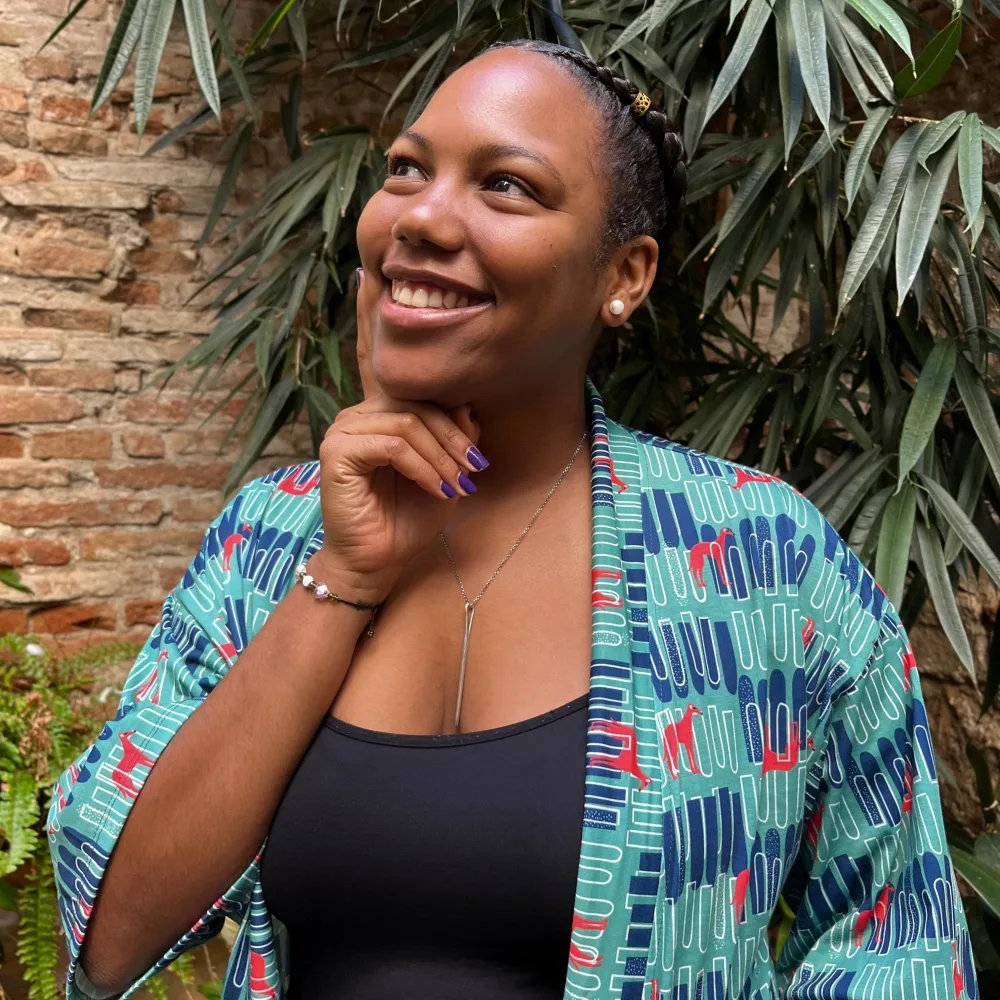
Written by Melany Bascome